You are not wrong, who deem
That my days have been a dream;
Yet if hope has flown away
In a night, or in a day,
In a vision, or in none,
Is it therefore the less gone?
All that we see or seem
Is but a dream within a dream.
-- Edgar Alan Poe
I had a nightmare. I put an angry diatribe about the President and his administration on the Internet. At my Psychologist's office, the doctor tells me hypnosis will help me sleep. I walk down a stairwell in an infinite spiral downward. Back home, I write a manifesto. I fall asleep, woken up by a camera flash. I'm on my back, naked on the floor in a hotel corridor, covered by a mylar blanket. I look up at
the photographer. In a prison common room, I'm waiting for my trial. The TV news lady says the President's poll numbers are up and Congress approved for the President
a gold leaf ballroom.
This isn't what happened over a week ago in Washington, DC. The nightmare attempts to illustrate, besides my paranoia, a planned act of violence that once again
played out differently than what was intended. A commentator pointed out that, for someone who graduated from CalTech, a prestigious engineering school, you'd think he'd
have a smarter plan.
I thought about the plan but didn't get far. I can't pick up a gun because of childhood trauma (for some, holding a gun imparts a feeling of power).
I read his manifesto.
I won't bother to poke holes in his logic or what he was certain to be true, except for one important thing he didn't understand. When he left the cocoon that spawned his thinking
and entered the harsh spotlight of a hallway outside a dinner attended by administration officials and journalists, he had no control over the narrative and no popular
support for it.
The president may be awful or great, in the ancient Egyption monument builder sense of the word. Historians will someday look back, analyze the consequences of his decisons, and
and reach a consensus. It's wrong-headed for us at the bottom to be obsessed with the man and his minions at the top of the political hierarchy while we can, let's hope, vote them
out of office. We should instead focus
on improving the small world outside our front doors.
Manifestos are definitely a thing. The CEO of Palantir recently published a manifesto on X. I recommend the Front Porch Republic's manifesto published in 2018. If I was
to write my own, it would be a little different. I would, for example, replace "Front Porch Republic" with "Front Porch Democracy."
My manifesto would first acknowledge that here in the United States, the Constitution, for all its flaws, is the law of the land. Our political, corporate, and financial hierarchies
may topple a hundred
or a thousand years from now, but that's not the concern. The emphasis would be on localization and democracy. Localization is the creation of local manufacturing, energy, and jobs.
This is thought to be unrealistic because "it doesn't scale." Today's economics will have to change to allow
a local energy plant to exist without a return on the initial investment. This sounds like a version of the hated Green New Deal, but it's not communism. There will be work to
be done.
Local democracy is simply counting the raised hands in a school auditorim.
Sara Radin, Why “neighborism” is having a moment Vox, The Highlight, April 30, 2026
"After decades of social isolation, people are realizing proximity is a resource."
This is a joke an Engineering Economics instructor told the class.
There are four types of German officers. The first type of officer is brilliant and hard-working. He turns his ideas into wins on the battlefield. The second is brilliant but lazy. He doesn't work on his ideas or pass them on. The third is stupid but lazy. He ideas are bad but because they stay in his brain he doesn't do great harm. The fourth type is stupid and hard-working.
A Maharishi in Manhattan
A ninth-grade highschool teacher told this story to the class. I remember the teacher as a thin, elderly man who was going bald, but I was young and memory is fallible.
A guru, or Maharishi, a seer from India, stood on a sidewalk in downtown Manhatten facing the street. He wore a white robe and had a gray beard. Behind him was a large department store window. Hundreds of items for sale were displayed behind the glass. The
guru turned his head back for a moment to stare at the window, then turned his head to again face the street. He then named every single item behind the window.
The teacher acted out the story as he told it. He turned his head to the side and then back, as if he had his back to us and was looking backwards. When he turned his head to the
back of the classroom, his eyes widened as if focused for a few seconds on the items behind the window.
My step-father sinks a sailboat
After my Mom married her second husband in a small stone church in Upper Nyack, New York, my mom, sister, brother, and I moved into my step-father's house. His house was about a mile north on the main road. From the front, it appeared to be a one-story ranch house, but because the house was built on a slope, the basement had a large window and a door to the outside.
The house looked out onto the Hudson river on a spot where the land was mostly level. On one side of the house was a gravelled circle for cars to park or turn around. A path at the far end of the circle went down to a stone cottage by the shore.
On the other side of the house was a yard, surrounded on three sides by a wall. The wall was about five feet high and surrounded the yard with embrasures like an actual castle wall. At the far end of the yard a footbridge spanned the one-lane road that led to the house and went on to wind its way down the hill, turning left under the bridge. Where the road turned left, on the right a path led to a pond surrounded by the castle walls. I'd go there to collect frog eggs and watch them become tadpoles. Past the bridge, near the shore on the right, the castle wall rose in height and against it stood a fireplace, the remains of a second stone house.
The footbridge in 2017, the road replaced by grass. Inset: 1901
The road reached the river's edge and turned left again, parallel to the shore leading to a wooden dock extending onto the water and the stone cottage beyond. Children about my age would bring their fishing poles to the dock to fish for perch.
Along the water's edge were stones of various sizes. The smaller, flatter ones we'd pick up and throw to see how many times we could get them to skip off the water. The bigger stones were covered with a green algae and slippery. Horseshoe crabs slambered over them and slid into the water.
When you opened the front door of my step-father's house, the kitchen was on the right, the door to the garage converted into a bedroom on the left, and before you was the living room. From the large window that went nearly to the floor you could see the Hudson river, the dock below you, and Westchester on the other side. The window was composed of large glass slats called jalousies. Beside each slat was a crank for opening and closing. On weekends, my step-father would sit in his recliner near the window in his bathrobe.
H. Russell Drowne the third was a business man, rodeo cowboy, and polo player. He had one or two horses he kept in rented stable stalls. He was the fleet manager of a Chevrolet dealership in New York City. His father was an Army Brigadier General. He had rifles for shooting skeets and a handgun he kept on a shelf in the hall closet.
Russell Drowne, businessman, cowboy, and Polo player
H. Russell Drowne's step-father was Richard Jewett. Mr Jewett was the mayor of Upper Nyack from 1959 to 1977. We knew Mr. Jewett as "Mort." Mort's father, Major Richard Jewett, built the castle walls and stone houses in the early 1900s. H. Russell Drowne's house belonged to Mort.
Joe Targett lived alone in the stone cottage on the shore of the Hudson. He had a kayak and a sailboat
moored to the dock. He taught English at Columbia University. I don't remember this, my memories are fragmented, but my sister told me we'd go down the path to his
cottage and knock on his door so we could listen to his stories.
One day, I can't say exactly when, my step-father took one of his guns, cranked open a jalousie window, pointed it at the sailboat and fired and fired until the boat sank.
I don't know what was said later about it, or who took care of the sunken boat. Its remains were taken away and not seen again.
In early April, either the same or following year after his sailboat sank, Joe Targett set out onto the Hudson river with his kayak. A storm appeared,
capsizing his kayak, and he drowned. His body was found two weeks later. This is what I remember, but was there a storm?
Joe Targett Feared Drowned New York Times April 15, 1962Joe Targett d. April 5, 1962 Hartford Courant April 26, 1962, page 50
Not long after Joe Targett's personal belongings were taken away, H. Russell Drowne's eldest son, Henry Russell Drowne the fourth, we knew him as "Rusty," moved into the cottage. When he got married his
wife, I believe she was a nurse, moved in and they lived together in the cottage for a long time. Rusty was a good man. He flew down from New York to attend our
half-brother Alex's funeral service. Rusty died in 2003 at the age of 58.
A Professor demonstrates infinity
My Dad studied Chemistry as an undergrad at an Ivy-league university. One day everyone was sitting at their desks waiting for the Professor to arrive.
The Professor entered the classroom, walked to the front of the class, and said, "today I am going to demonstrate for you Infinity." The Professor picked up a piece of chalk, went to one end of the chalkboard, drew a horizontal line to the other end, walked to the window nearest to the board and jumped out.
The story is missing a few important details. Was this a course in Mathematics, Physics, or Economics? How tall was the building the classroom was in and what floor were they on?
Until recently, I thought Joe Targett's name was Joe Target and I couldn't believe it was a real name. At an Upper Nyack elementary school reunion in June 2017, I asked a former classmate, do you remember Joe Target? Was that his real name? He replied, yes, that was his name.
Akira Kurasawa's film "Roshomon" tells four stories of a crime that left a husband dead and his wife possibly raped. The wife, a bandit, a woodcutter who
was a witness, and the husband from beyond the grave, each tell a different tale. Each tale puts the teller in his or her best possible light. Like the trial jury, the audience watches and listens. The truth is elusive but the audience is free to choose one story they believe is the truth. The woodcutter's story is my favorite.
Comparing the film to what happened to Renee Good on January 7, 2026 isn't entirely accurate but I'll continue. Witness videos of the scene were inconclusive but the video from
the officer's own camera apparently showed the officer was run over before shooting Ms. Good four times. The administration promptly concluded Ms. Good was a domestic
terrorist who weaponized her car to intentionally harm the officer. Other observers saw a deliberate murder.
The observers tell the stories of Renee Good and Alex Pretti deaths. The victims and, most probably, the shooters will be mute forever. The most powerful observer needs everyone to see the shooters as heroes acting in self-defense and understand the severe consequences of impeding ICE. The administration is committed to the policy ICE is carrying out.
The enemy within
A New York Times' frame-by-frame analysis focused on the officer's video does not show the officer was hit by Good's car. Ms. Good must have thought she had a clear path
to drive away or she panicked. The officer did not have to shoot Ms. Good. Looking at it from the outside, my guess is adrenaline fueled rage and fear played a major role.
An officer approaching her car said, "get out of the f*cking car." After the officer shot Ms. Good, his reaction was, "f*cking bitch."
Possibly the officer suffered from PTSD. Last June he was dragged fifty yards by a car while attempting to apprehend someone. It's understandable that the dangerous work of arresting undocumented criminals would lead to PTSD, like the harrowing experiences of soldiers in battle.
ICE and border control officers belong to a paramilitary organization that wears masks, helmets, and camo, wields high-powered weapons, and that is charged with rooting out "the enemy within." Their "Operation Metro Surge" intentionally evokes the military surges in Iraq and Afghanistan. The rate of PSTD must be nearly as high as it is in the Army and Marines.
More important than useless speculation about psychological states is the law. The legal standard for an officer I believe is reasonable fear of being in mortal danger. This is a difficult standard to apply, when the video footage
is ambiguous and an officer's actions are based on evaluating in the moment what is real and what is imagined.
Tyranny of the Majority
"After all, the practical reason why, when the power is once in the hands of the people, a majority are permitted, and for a long period continue, to rule, is not because they are most likely to be in the right, nor because this seems fairest to the minority, but because they are physically the strongest. But a government in which the majority rule in all cases cannot be based on justice, even as far as men understand it. Can there not be a government in which majorities do not virtually decide right and wrong, but conscience? — in which majorities decide only those questions to which the rule of expediency is applicable?"
-- Henry David Thoreau
Ms Good and her wife should not have heckled the ICE agents and then attempted to drive away. They didn't understand how dangerous their situation was. If they had understood,
they would have prepared to be arrested. They must not have known how often police have shot drivers attempting to leave the scene. Neither was a "domestic terrorists," a stupid, counter-productive thing to be. If they saw themselves as non-violent, they didn't have a clear idea of they were trying to achieve and how to go about it. It would have helped if they had read Henry David Thoreau's 1849 essay, Civil Disobediance.
Conservatives don't like anyone impeding officers from carrying out the law. Civil disobedience is about exactly that. It's about standing together to get in the way,
breathing tear gas, getting hit by pepper balls and getting arrested. It's about politely explaining why you're there. It's about standing up to a policy that promises
to arrest the entire community if that it takes to enforce the law.
In Minneapolis, the community
decided to embrace innocent and hard-working undocumented immigrants as neighbors.
It should not be a victim of a bad policy that is unjust in the way it attempts to enforce a broken immigration law.
They are right to protest when ICE writes its own warrants giving itself permission
to batter down front doors and make arrests because it's cheaper and quicker than judicial warrants. Because mitigating factors are ignored it's also cruel.
That a community has a lright to self-determination is an ideal that's difficult to defend. I don't recommend civil disobedience generally. In the United States, you make a mistake, you are dead and labeled a terrorist. In other countries, if you go outside to protest you are likely to die.
What about the undocumented murderers, thiefs, fraudsters, child molesters, rapists, and gang members? Doesn't ICE have a right to arrest them? State and city governments
must negotiate with ICE and offer assistance with rounding up undocumented immigrants with felony convictions. In exchange, ICE will not not sweep
streets, schools, hospitals, and houses looking for anyone who is undocumented. If ICE doesn't agree, they should let everyone know they tried.
Joel Villasenor-ruiz `Rashomon' Is Truly Classic, Even If Truth Is Unknowable The Harvard Crimson, December 2, 1993
"At the end of the film, we are no closer to knowing the truth, and that is in great measure the movie's theme, the very unknowability of truth."
Rorschach.Org
"Established in 1996, as "The Original Rorschach Website," Rorschach.org was founded by Mark W. Matthews, PhD and aims to continue providing an online resource for information about the ethical and professional use of Rorschach Inkblot Test. To this end, we have collected a variety of resources and products to help the student and professional administer, score, and interpret the Rorschach Inkblot Test in an ethical, reliable, and valid manner."
Past Poll Results SMERCONISH January 10, 2026:
Do you have an open or closed mind as to the guilt or innocence of the Minnesota ICE agent? (Percentage of 62,084 votes)
53.43% - Open
46.57% - Closed
The New York Times Video Analysis of ICE Shooting Sheds Light on Contested Moments
The New York Times, January 15, 2026
"Newly available videos and existing footage synchronized and assessed by The Times provide a frame-by-frame look at how an ICE officer ended up shooting and killing a motorist in Minneapolis.
...
In a video analysis, The Times focuses on some of the key contested moments of the agent’s cellphone video alongside other footage. More videos are likely to emerge, but the visual evidence shows no indication that the agent who fired the shots, Jonathan Ross, had been run over. The footage provides visibility into the positioning between the agent and Ms. Good’s S.U.V., and the key moments of escalation. It also establishes how Mr. Ross put himself in a dangerous position near her vehicle in the first place."
Deportation Data Project
"The Deportation Data Project collects and posts public, anonymized U.S. government immigration enforcement datasets. We expect these
datasets to be used by journalists, researchers, lawyers, and policymakers."
ICE Enforcement and Removal Operations Statistics
"The following dashboards present for the first time information and trends in arrests, detentions, removals and alternatives to detention as of December 31, 2024.
The dashboards will be updated quarterly."
Under President Trump’s leadership, ICE has arrested members of some of the world’s most dangerous criminal gangs in Sanctuary Minnesota U.S. Immigration and Customs Enforcement, January 14, 2026
"WASHINGTON — ICE has arrested several gang members — many convicted of violent crimes — in Minnesota. These are the worst of the worst criminal illegal aliens that ICE is targeting and who rioters, agitators, and sanctuary politicians like Tim Walz and Jacob Frey are trying to protect. Several of these dangerous criminal illegal alien gang members have been arrested during Operation Metro Surge in Minneapolis."
"We’ve arrested over 2,500 criminal illegal aliens in Minnesota since starting this operation with DHS,” said ICE Director Todd M. Lyons. “We’re picking up the worst of the worst offenders, and as these cases come in, we’re finding that a significant number of the aliens we arrest — in addition to having serious criminal histories in the U.S. and abroad — are part of dangerous gangs that terrorize communities all over the nation.""
Mariana Alfaro Native Americans are being swept up by ICE in Minneapolis, tribes say The Washington Post, updated January 16, 2026
"Tribal leaders say Indigenous people have been stopped, questioned, harassed and, in some cases, detained solely on the basis of their skin color or names."
Immigration Raids Statistics in US 2026 | Recent ICE Raids The World Data - The Insight Hub, January 13, 2026
"The statistics paint a stark picture of the current state of immigration enforcement in 2026. With 68,990 individuals held in 212 detention facilities as of early January 2026, the United States is operating the world’s largest immigration detention system at unprecedented capacity levels. What stands out most dramatically is that 73.6% of detainees—nearly three-quarters of the detained population—have no criminal convictions whatsoever, contradicting administration claims that enforcement focuses primarily on dangerous criminals.
...
The nationwide death toll from ICE agents and their raids since Trump took office in January 2025 has reached 32 people, according to United We Dream, including individuals killed while fleeing raids such as California farmworker Jaime Alanís Garcia, who fell from a greenhouse roof, and Roberto Carlos Montoya Valdez, struck by a car while running across a freeway as agents raided a Home Depot."
Jacob Sullum A Texas Cop Endangered Himself by Jumping Onto a Moving Car. Then He Shot the Driver. Yahoo News, April 6, 2012
"The officer, Roberto Felix Jr., stopped Barnes because the license plate of the rental car had been linked to toll violations by another driver. About three minutes into the stop, Barnes began to drive away. Felix reacted by jumping onto the door sill of the car with his gun drawn. Within two seconds, perceiving a threat to himself as the car accelerated, Felix fatally shot Barnes."
Joe Lancaster Renee Good Was a Casualty of Trump's Order Against Political Violence' Reason - Free Minds and Free Markets, January 15, 2026
"The administration's written policies make it likely that more people like Renee Good will be targets, and victims, of ICE."
"Assaulting law enforcement deserves little leeway, but "impeding" could be completely nonviolent, and it certainly doesn't rise to the level of terrorism. And yet within hours of Good's death at the hands of a government agent, federal officials—including Vice President J.D. Vance and Department of Homeland Security Secretary Kristi Noem—jumped to the conclusion that Good was a terrorist, seemingly based on nothing more concrete than that she was impeding an ICE operation."
Carlos Miller ‘Get Up!’: Michigan Police Shot Black Man In the Back Nine Times and ‘Kicked His Lifeless’ Body While Yelling Commands In Ill-Fated Traffic Stop. Now Sheriff Won’t Release Video, Lawsuit Claims Atlanta Black Star, January 22, 2025 Updated on January 31, 2025
"A Michigan sheriff’s office is refusing to release details about shooting an unarmed Black man nine times in the back as he ran away from a questionable traffic stop, including evidence like body and dash camera footage which captured the shooting.
But the Oakland County Sheriff’s Office assures the public has nothing to worry about because not only did they investigate themselves and found no wrongdoing, another Michigan sheriff’s office from a nearby county also investigated the shooting and found no wrongdoing."
Tiarra Braddock ‘Sheriff corrects record: No gun found in deadly deputy shooting in Ypsilanti WXYZ Detroit, January 14, 2026
"Washtenaw County Sheriff Alyshia Dyer reveals deputies initially reported suspect had shotgun, but Michigan State Police investigation found no firearm in vehicle
On Jan. 6, Washtenaw County deputies shot and killed a 34-year-old man from St. Clair County after a traffic stop turned into a chase that ended with a crash near Towner and Prospect streets in Ypsilanti.
Initially, the sheriff's office reported that the suspect was armed with a shotgun. However, Sheriff Dyer now confirms no gun was ever found inside the van."
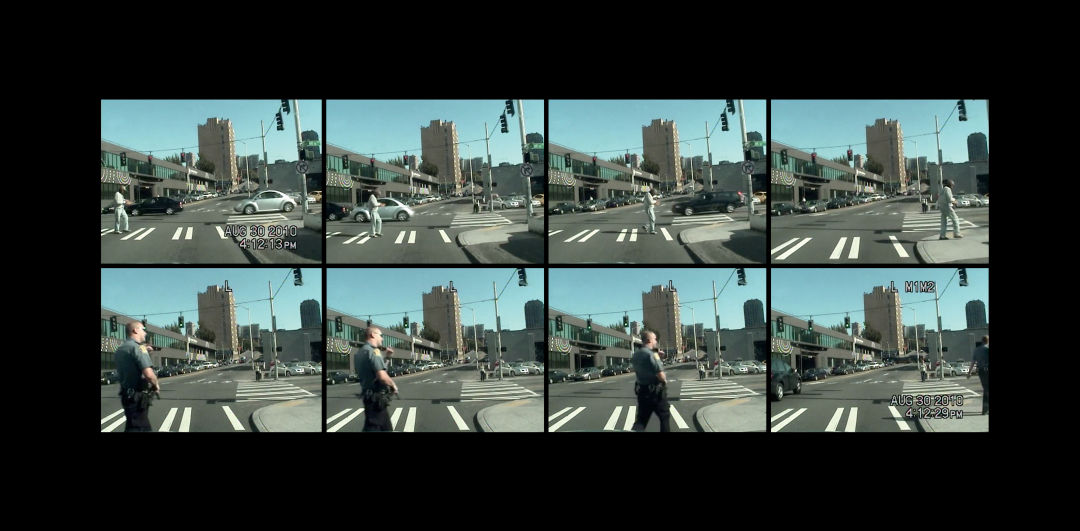
Casey McNerthney
Family: Man shot by police was deaf in left ear Seattle PI, August 31, 2010
"The man fatally shot in confrontation with a police officer Monday afternoon after he refused to follow police orders was deaf in his left ear, the man's brothers said Wednesday.
John T. Williams, 50, was shot about 4:15 p.m. at Howell Street and Boren Avenue after police say Officer Ian D. Birk' yelled three times for him to drop a knife and Williams did not."
The Associated Press North Carolina Deputy Shot And Killed Black Man While Serving A Warrant Oxygen - True Crime, April 22, 2021
"An eyewitness reported that Andrew Brown Jr. was shot while trying to drive away from the scene as activists seek the release of body cam footage of the incident."
Carlos Miller ‘Out of Control’: Indiana Cop Unloads Gun On Black Woman Fleeing Domestic Abuser and Gets Off; Family Sues Atlanta Black Star, August 13, 2025
"Dachena Warren-Hill, a 20-year-old Black woman, was attempting to drive away from the man who was abusing her when she was shot and killed by an Indiana police officer in 2023.
Officer Mark Guzman of the Fort Wayne police claimed he was in fear for his life when he opened fire, claiming she was driving her car directly toward him.
However, body camera footage released three months later shows Guzman was not directly in the car’s path because she was driving away from him when he opened fire."
And we are put on earth a little space,
That we may learn to bear the beams of love...
-- William Blake
In December, 2013 the human rights lawyer and activist Razan Zaitouneh and three others were taken from their offices at the Violations Documentation Center in Douma, north of Damascus. Although their fates aren't certain, it's likely they were imprisoned and later killed. Over eleven years later and
as many
as 620,000 Syrians dead, there is hope that Syria's new government will care for its citizens. Bashar al-Assad is finally gone, a man who loved
power more than life.
It's comforting to think that the deaths of Zaitouneh and her colleagues were not in vain. But was the naive onviolent resistance
that began, what the West termed the Arab Spring, worth it? Mrs. Zaitouneh must have understood that her opposition to the Syrian regime could end her life. She had been hiding and was documenting human rights violations when she was abducted.
But not everyone expected the sadistic crackdown on dissent. Mass murder, torture, hangings, gas attacks, starvation, and the intervention by Russia and Iranian militia are al-Assad's legacy.
In the early days of protests against their rule of India, the British killed thousands protesting in 1919. This is far fewer compared
to the Syrian civil war but it's how colonialists decided to punish their rebellious foreign subjects, and how many countries react to protests by their own citizens today. Therefore, to eventually bring about an enlightened government through nonviolent resistance, many people may have to die.
How many people have to die? If Russia succeeds in conquering Ukraine, Russia is probably willing to kill all Ukrainians. Putin wants Ukraine, not Ukrainians. The missiles and drones directed at civilian targets say what Putin wants. Within Russia, real resistance would requre spontaneous and sustained nonviolent protests across the country. Millions would have to die or be imprisoned before the country no longer functioned and the totalitarian government fell. A million Russians alone could die before the surveillance cameras were overthrown.
In the United States, surveillance cameras will be even more popular because of their role fighting crime. Within the past year, camera footage shown to the public led to the arrest of two assassins. In the future, an Artificial Intelligence (AI) will watch a camera's live feed and alert authorities if it notices something suspicious.
Do we need another application of AI? Historically, assassinations have had bad consequences: Julius Caesar, the end of the Roman Republic,
Abraham Lincoln, reconstruction followed by Jim Crow, Archduke Ferdinand,
the spark that ignited World War I, John F. Kennedy, the Vietnam war and assassination of his brother, Martin Luther King, hero of nonviolence and civil rights, John Lennon, I wonder what he'd say if he was alive today, and Yitzhak Rabin, peace between Israel and a Palestinian state replaced by war and terrorism.
There was the assassination of the Nazi Governor Reinhard Heydrich in May, 1942 by two Czech agents. Heydrich was an architect of the Holocaust and organizer of Kristallnacht.
The Nazis retaliated by destroying a Czech village, killing all the men and sending most of the women and children to concentration camps in Germany.
Nazi brutality is not what we are experiencing today. We need better words that more accurately describe our own time. My impression is that there is an aspiration on the right for a state
that believes freedom is buying and selling with no government regulation, a gun buyer automatically joins a militia, families should have children
and go to church on Sunday or synagogue on Saturday, the tragedy of the commons is a hoax,
education, medical insurance, and charities are private, discouraging words should seldom be heard, and there is only one legitimate political party
This amounts to a Libertarian dictatorship, an oxymoron and Bizarro World vision of China.
This could be nonsense or an over-simplification. To discover the truth we must ask questions that will draw it out from behind the rhetoric. We could have asked someone who practiced free speech by saying extreme things, yet would have a civil debate with anyone. We lost that someone. It was a tragedy of the commons, that we were unable to share the public space of podcasts, debate, television, youtube videos, and social media. The "we" that could share this space is purely aspirational.
Donatella Della Ratta Syria: The virtue of civil disobedience Aljazeera, April 6, 2012
"Civil disobedience is the only way to mobilise people in big cities that are deemed to be regime strongholds in Syria."
Lydia Denworth
Conservative and Liberal brains might have some real differences Scientific American, edited by Gary Stix, October 26, 2020
"The volume of gray matter, or neural cell bodies, making up the anterior cingulate cortex, an area that helps detect errors and resolve conflicts, tends to be larger in liberals. And the amygdala, which is important for regulating emotions and evaluating threats, is larger in conservatives."
Our need to communicate, eat and drink, clothe ourselves, and move about, and our desire for comfort and convenience,
has transformed the world with manufacturing, tools, and invention. Consequently, the natural world has shrunk.
Supply chains cover the earth transporting food and raw materials, land is cleared and leveled, used goods are sent to poorer countries
to be dumped, and more energy and materials must be extracted from the earth and refined.
Forests are cut down, oceans and rivers are polluted with toxic waste, the planet warms, and wild animals go extinct.
New ways to automate and conserve human energy has created a metaphysical hierarchy of tools, goods, and services, where tools are goods and services, and vice versa. This is our modern civilization, because civilization is technology. Technology evolves and life is changed radically from a year, decade, and century ago. Primitive sharpened stones were made by hand by an ancestor of home sapiens.
A few million years later, thousands of copies of cars, computers, ball bearings, cell phones, and many other things are made every day.
Machine Learning, Quantum Computing, Robot, and Spaceflight technologies have advanced to a stage where extracting minerals from relatively
nearby objects in our solar system, asteroids, moons, and Mars, is feasible within a few decades. Extraterrestrial
mining in theory could move at least one harmful, but crucial for twenty-first century civilization, activity off-world, reducing the rampant world-wide extraction and distribution of minerals.
The Apple iPhone, for example,
is composed of about seventy elements on the periodic table. Obtaining these raw materials today requires a supply chain that spans forty-three countries on six continents. Reducing the size and scope of this chain could help save the environment from its predictable collapse.
Rare earth elements (REEs) in the iPhone and electric car batteries have useful magnetic and conductive properties. They are mined mostly in China, but opening new mines is in progress in North America and elsewhere. While the market waits years for these mines to become productive prices rise. Certain critical REEs, like Neodymium, are currently prohibitively expensive to mine. Others, like Indium, are dependent on mining other metals. But there is evidence that critical and endangered metals are plentiful in outer space.
Ranking
Impact per kg
primary metals
Impact global production
primary metals
1
Palladium
Iron
2
Rhodium
Chromium
3
Platinum
Aluminium
4
Gold
Nickel
5
Mercury
Copper
6
Uranium
Palladium
7
Silver
Gold
8
Indium
Zinc
9
Gallium
Uranium
10
Nickel
Silicon
"Ranking of metals according to their impact per kg (left) and to their contribution to total environmental impact (right). Source: adapted from UNEP (2010). Diverse types of environmental impact are considered. For fair assessment when comparing the environmental performance of different raw materials, it should be taken into account that very different quantities of alternative materials may meet the same function."
Source: Table 5.1: Priority list of metals based on
environmental impacts
There are obvious hurdles to overcome before reaching the minerals in outer space, and extracting and returning them to Earth becomes a reality.
It is a daunting project, a huge and highly risky investment
that promises trillions of dollars in return. A mining infrastructure must be built in space at a scale that can deliver minerals to Earth in large quantities and at a reasonable cost. The infrastructure must itself be built primarily from materials found in outer space.
The first step is a survey of the size, composition, and location of candidate asteroids and moons, beginning with near-Earth asteroids and our Moon.
Near-Earth objects (NEOs) can pass inside Mar's orbit and are at a maximum distance of 1.3 astronomical units (AU) from Earth, or 1.3 X 93 = ~121 million miles. There are three types of NEOs. The Amors are the farthest away and don't cross Earth's path. The Apollo and Aten asteroids both cross Earth's path, with the Aten asteroids the closest on average. The composition of these AAAOs varies widely and identifying the best candidates has been unreliable, but has been getting better.
Spectroscopic analyses of NEOs will narrow down the list of candidates. The next step is to visit a candidate with a small spacecraft.
Lockheed Martin has its Curio spacecraft and NASA a Small Spacecraft Technology Plan. The craft should be resusable, not too expensive to launch, and capable of traveling to asteroids and returning to a station near Earth for repairs.
And there must be enough energy and computing power onboard for conducting complex tasks.
Price of launching one kilogram of payload mass to LEO as part of a dedicated launch (FY21$/kg denotes estimates using dollar values in fiscal year 2021). LEO is the region between 100 and 2,000 km above mean sea level.
Source: authors’ calculations (12).
Asteroid mining has many moving and stationary parts. How everything will work together is speculation and nost of the parts are either under development or
in the lab.
For now, let's imagine a spacecraft powered by a nuclear reactor landing in a small crater in the shadow of the sun, after stopping the asteroid's rotation.
The craft has crew of three or four robots, a hybrid quantum-classical digital computer, and quantum sensors.
The onboard computer is encased in titanium to shield it from cosmic and solar radiation, protected from vibration, and cooled
about 4° C degrees colder than outer space, -273.14 to -273.15° C.
Ideally, the onboard computer wouldn't be necessary. Each robot would have its own quantum computer brain enclosed within a titanium skull. Their computing power would combine to make decisions collectively and run their own simulations when an unexpected problem is encountered.
But I don't know if the quantum computer will be small enough or how much energy it will require. Miniaturization of its components is inevitable.
The story of the vacuum cleaner is one example of a technology that became smaller to be more convenient. But quantum computing has major issues that must first be resolved.
The robots have minimal human guidance in outer space. It takes minutes for a radio signal to reach a near-earth asteroid from earth, how many minutes depending on the relative orbital positions of the earth and asteroid. If something unexpected occurs in the middle of a operation, like a solar flare, there won't be enough time for humans to intervene. The robots and onboard computer decide what to do on their own.
A collective Large Behavior Model (LBM) tailored for industrial mining guides decision making. Both the onboard computer and the robots have radios for classical communication
and laser optical terminals capable of receiving and transmitting single photons. Each emitted photon is one of a quantum entangled pair created by spontaneous parametric down-conversion. Transmission and reception of entangled photons between the quantum computer and each robot exchanges a quantum key. This is quantum key distribution (QKD) entangling the computer and robots in a secure quantum communication network. The robots wear space suits to protect moving parts from abrasive dust. The robot's optical terminal aligns with the onboard computer's terminal when it finishes a task or there is a problem.
The onboard computer issues a command to deploy quantum LIDAR sensors to map the uneven terrain. The purpose of the mapping is to prepare the robots for
their collaborative work and refine the steps they will perform, and to locate ice. NVIDIA has what it calls a digital twin that creates a virtual simulation of the entire environment. The computer builds a its own simulation dynamically from the quantum LIDAR data.
The robots already had
reinforcement and supervised training to help them learn to adapt to various terrains, including training in a crater on the Moon.
Quantum magnetometer and gravimeter sensors are deployed and operated by the robots to measure minute variations in magnetism and gravity on the surface of the asteroid. The computer analyzes the data from the sensors to determine whether within the interior there are enough critical metals that will return
a orofit back on Earth.
If there is enough water but not critical metals, the water is gathered to make rocket fuel and the craft takes off for the next asteroid.
If enough critical metals are found within the asteroid, preparations are made to begin mining. A responsible, cost-effective way to extract the metals without gravity to assist is a hard problem. Smaller asteroids are mostly rubble on the outside which is relatively easy to remove by optical mining.
The stabilized small asteroid is enclosed in
a gigantic inflatable bag. A lens and mirror system directs concentrated sunlight to vaporize the ice and outer silicate material. What remains is the inner metallic core and water vapor. The collected water vapor and inner metallic core are returned to Earth. Optical mining of asteroids about the size of a football field or smaller doesn't need robots or a super-sophisticated computer. It must be sophisticated enough to
carry out its mining operation without human intervention.
Let's continue hand waving for larger asteroids. Surface ice is heated and the vapor is collected within an enclosed area. The asteroid is then
broken up into manageable pieces. Optical mining is employed to focus concentrated light on fault lines.
The extracted metal ore is put into a gigantic inflatable bag. A small rocket attached to the bag contains the fuel made from collected water vapor.
The bag is launched towards a refinement station circling the moon.
The non-metallic pieces and glassy surface dust could be disposed by putting into a second bag. This bag could be launched to fall into the sun or towards the Earth or Mars to merge with other bags of debris and become another moon. Or the bag could be left where it is, its last position marked on a map to share with prospectors. Or the dust grains and debris is left alone, where the asteroid used to be. Someday we might find intelligent life on a planet orbiting a remote star by the unusual amount of dust and debris enveloping the star.
Satellites orbiting the earth was described in fiction back in 1869. In 1945, science fiction author Arthur C. Clark proposed geostationary satellites for communication. In 1957, twelve years later, the first artificial satellite, Sputnik, was launched into orbit. In 2011, after launching satellites into orbit for over fifty years, over 20,000 objects orbiting the Earth were being tracked. The number of small bits of debris,
ranging in size from a few millimeters to a few meters, orbiting at an altitude from about 435 miles/700 km to 800 miles/1,300 km, is probably
in the millions.
Something to think about before we begin to seriously attempt to extract minerals in outer space.
Dust Devil photographed by the Mars Curiosity Rover
Humans should not mine asteroids or banish themselves to an inhospitable lonely dead planet.
Humans are too fragile and won't survive. The health of our brains, eys, heart, bones and muscles depend on Earth's gravity. We depend on Earth's
magnetic field to shield us from solar and cosmic ray radiation, and on Earth's atmosphere to breath and its temperatures that don't instantly
freeze us to death. Thinking robots are the projection of human consciousness into outer space that may someday keep humanity alive.
The Planetary Resources Company, formed originally in 2009 as Akryd Astronautics, planned to mine asteroids with the help of robots. They began by building a
series of low-cost satellite telescopes which would conduct a survey of NEOs. After some failures and a little sucess, they ran of funding, were
bought by another company, and their work was abandoned.
Deep Space Industries (DSI), at one time a Planetary Resources competitor, was deveoping low-cost spacecraft to sell to private companies and NASA. These craft would be primarily used for asteroid prospecting. DSI was bought by Bradford Space but as of 2021 at least one of its projects, Comet electrothermal propulsion, has continued in Luxembourg.
Planetary Resources and DSI failed because of how difficult it is to build a low-cost extraterrestrial mining business. The industry needs long-term support that is able to look past initial failures. This may mean some form of government sponsorship.
"We choose to go to the moon. We choose to go to the moon in this decade and do the other things not because they are easy, but because they are hard. Because that goal will serve to organize and measure the best of our energies and skills, because that challenge is one that we're willing to accept. One we are unwilling to postpone. And therefore, as we set sail, we ask God's blessing on the most hazardous and dangerous and greatest adventure that man has ever gone."
-- President John F. Kennedy
Éléonore Lèbre, Martin Stringer, Kamila Svobodova, John R Owen, Deanna Kemp, Claire Côte, Andrea Arratia-Solar, Rick K Valenta, The social and environmental complexities of extracting energy transition metals Nature Communications. September 24. 2020;11(1):4823. doi: 10.1038/s41467-020-18661-9
"Our findings show that 84% of platinum resources and 70% of cobalt resources are located in high-risk contexts. Reflecting heightened demand, major metals like iron and copper are set to disturb more land."
Chemical Innovation Knowledge Transfer Network, Endangered Elements American Chemical Society
Helium
Atmospheric recovery of helium is nearly impossible.
Price shocks are frequent.
Indium
The world's supply of indium is dependent on zinc mining. Indium recovery from post-consumer LCD scrap is cost prohibitive.
Neodymium
Recovery is expensive and underdeveloped. REEs are lost during electronic waste recycling. Demand is growing. Geopolitical concerns.
The International Resource Panel Global Resources Outlook 2024 United Nations environment programme
"The world is in the midst of a triple planetary crisis of climate change, biodiversity loss and pollution and waste. The global economy is consuming ever more natural resources, while the world is not on track to meet the Sustainable Development Goals. The scientific community has never before been more aligned or more resolute on the need for urgent global transformation towards the sustainable use of resources."
Hertwich, E., van der Voet, E., Suh, S., Tukker, A., Huijbregts M., Kazmierczyk, P., Lenzen, M., McNeely, J. and Moriguchi, Y., Assessing the Environmental Impacts of Consumption and Production UNEP (2010) "Assessing the Environmental Impacts of Consumption and Production: Priority Products and Materials, A Report of the Working Group on the Environmental Impacts of Products and Materials to the International Panel for Sustainable Resource Management."
Chhoeun Prem, Justin Ciferno, Cody Cooper, iPhone Commodity Chain
The Making of the iPhone April 27, 2015 by Justin Ciferno
The Ohio State University, April 27, 2015
"Less than 1% of rare minerals are recycled; therefore, the rare earth minerals used in iPhones are thrown away after the phone’s life has expired."
John Walker, Solar System Live Fourmilab, February and March, 1995
"Welcome to Solar System Live, the interactive Orrery of the Web. You can view the entire Solar System, or just the inner planets (through the orbit of Mars)."
Renaud Merle, Valentin R. Troll, Mikael Höök, Magdalena Kuchler, Paul K. Byrne, George Donoso, Extra-terrestrial resources: A potential solution for securing the supply of rare metals for the coming decades? GeologyToday, Wiley Online Library, First published: 25 December 2023 | https://doi.org/10.1111/gto.12454
"The forthcoming energy transition driven by the need to reduce CO2 emissions requires large amounts of critical elements to construct renewable energy devices such as car batteries, wind turbines and solar panels. For many elements such as Li, Co, REEs and Ti, the production sources are located in countries with poor social and environmental standards, prone to political destabilization such as military conflicts, or vulnerable to strained relationships with consumer countries [...]"
Artificial Intelligence (AI) and Robots in Outer Space
Mackenzie Ferguson, AI Tools Researcher & Implementation Consultant, Humans vs. Robots: The Ultimate Showdown in Space Exploration Opentools.ai, Last updated: January 1, 2025
"Despite the rising capabilities of robotics, challenges in deploying AI in space remain, primarily due to technical and logistical constraints like processing power and energy requirements. Nonetheless, the continuous improvement in AI technology holds promise for expanding its applications, enabling more sophisticated autonomous decision-making and even supporting human teams in space missions."
John Sanford, New center harnesses AI to advance autonomous exploration of outer space Stanford Engineering, Stanford University, June 18, 2024
"Researchers at the Center for AEroSpace Autonomy Research, or CAESAR, say that AI could, among other things, optimize spacecraft navigation, enhance the performance of planetary rovers, and keep tabs on the space junk orbiting Earth."
IBM Quantum Learning, Quantum computing in practice IBM Quantum Platform
"This course focuses on today's quantum computers and how to use them to their full potential. It covers realistic potential use cases for quantum computing as well as best practices for running and experimenting with quantum processors having 100 or more qubits."
Katherine Wright, edited by Mark Fischetti,
What’s a Qubit? 3 Ways Scientists Build Quantum Computers Scientific American, "originally published with the title “What's a Qubit?” in SA Special Editions Vol. 34 No. 2s (June 2025), p. 102"
"A complete quantum computing system could be as large as a two-car garage when one factors in all the paraphernalia required for smooth operation. But the entire processing unit, made of qubits, would barely cover the tip of your finger."
Charlie Wood, Physicists Use Quantum Mechanics to Pull Energy out of Nothing Quanta Magazine, February 22, 2023
"The quantum energy teleportation protocol was proposed in 2008 and largely ignored. Now
two independent experiments have shown that it works."
Javier Alejandro de la Osa Fernandez, Entangled Photon Sources For Quantum Communications Alter Technology, December 14, 2022
"Alter Technology is the prime contractor of a consortium for developing a compact, robust, and reliable Quantum Photonic Transceiver (QPT) capable of generating and detecting secure encrypted keys for its use in space communications under the frame of the ARTES program."
Marin Ivezic, Quantum LiDAR vs. Quantum Radar POSTQUANTUM, October 18, 2023
"And in the realm of communications, while not exactly LiDAR, the same quantum LiDAR hardware might double as a quantum communications device (since entangled photons can be used for ultra-secure communication when not used for sensing). This points toward hybrid systems in the future that do both sensing and communication with quantum states of light."
Aayushi Jain, Quantum Computing and Its Applications in Robotics Analytics Insight, August 19, 2024
"Many problems in robotics are reduced to the solving of formidable optimization problems, such as pathfinding, scheduling, and resource allocation. Examples include determining the most effective path for an autonomous robot to move in a changing environment and scheduling specific actions with other robots. Generally, quantum computing solves these types of problems much better than classical computing because quantum algorithms explore numerous solutions simultaneously."
Farbod Khoshnoud, Ibrahim I. Esat, Clarence W. de Silva, and Marco B. Quadrelli, Quantum Network of Cooperative Unmanned Autonomous Systems Unmanned Systems, Vol. 07, No. 02, pp. 137-145 (2019),
"This paper investigates collaborative robotic tasks of unmanned systems in a network where the agents are entangled. For instance, a leader robot sends two identical photons (e.g. with vertical polarization) to two follower robots/autonomous vehicles to communicate information about various tasks such as swarm, formation, trajectory tracking, path following and collaborative tasks. The potential advantages of quantum cooperation of robotic agents is the speed of the process, the ability to achieve security with immunity against cyberattacks, and fault tolerance, through entanglement. If a Quantum Network is implemented in a robotic application, it would present an effective solution; for example, for a group of unmanned systems working securely together."
Matt O'Dowd, host, Quantum Energy Teleportation is REAL! PBS Space Time, May 1, 2025
"The vacuum of space is a chaotic sea of quantum fluctuations. Some have said that this vacuum energy can be harvested to build our future starship engines, or manipulated to build warp drives. It can't. But it is technically possible to move real energy through the quantum vacuum without it passing through intervening space. Quantum energy teleportation may be as close as we get to transporter beams. But how close is that?"
Matt Swayne, What is Quantum Robotics? Researchers Report The Convergence of Quantum Computing And AI Could Lead to Qubots Quantum Insider, May 9, 2025
"Quantum robotics uses quantum computing principles — such as superposition, entanglement, and quantum algorithms — to tackle challenges that traditional robots face. These include processing vast sensory data, meeting real-time response needs and enabling cognitive and emotional functions that mimic human intelligence. Unlike classical systems, quantum robots — or “qubots” — leverage the probabilistic nature of quantum mechanics to expand the scope and capability of robotics."
Beer, K., Bondarenko, D., Farrelly, T. et al., Training deep quantum neural networks nature communications 11, Article number: 808 (2020), Published February 10, 2020
Farbod Khoshnoud. Lucas Lamata, Clarence W. de Silva, Marco B. Quadrelli,
Quantum Teleportation for Control of Dynamical Systems
and Autonomy Instructions for Preparing LREC 2006 Proceedings
"A review of Quantum Multibody Dynamics, Controls,Robotics and Autonomy ([14]-[17]) is given. In this review, quantum entanglement (Section 2.1) and
quantum cryptography (Section 2.2) are used for hybrid classical-quantum control of classical multi-agent
autonomous systems. In Section 2.3, the concept of Quantum Teleportation in conjunction with application to dynamical systems for autonomy is introduced."
Humanoid Robots
Mike Kalil, Humanoid Robots in Space: Past, Present and Future of AI Robotics in Space Missions Kalil 4.0, September 27, 2024
"Humanoid robots are revolutionizing space exploration by performing tasks too dangerous or repetitive for astronauts. Join us as we explore the history and advancements of humanoid robots in space. From NASA's Robonaut to ISRO's Vyomitra, learn how these robots are shaping the future of space missions on the Moon, Mars, and beyond."
Boston Dynamics Just Dropped a NEW ATLAS That Actually Thinks AI Revolution, May 30, 2025
"Boston Dynamics just upgraded its Atlas robot with a powerful new perception system that allows it to think, adapt, and work in real time. Hugging Face revealed two new open-source humanoid robots, while China’s RobotEra stunned the world with STAR1, a robot that can cook dumplings with chopsticks. From Apple’s secret AI robot project to Saudi Arabia’s multilingual religious guide Manara and Elon Musk’s plan to send robots to Mars, this week marked a major leap forward in AI robotics."
Jay Ramey,
Auto Workers Could Look like This in the Future Autoweek, May 06, 2025
"Hyundai Motor Group boosts collaboration with its Boston Dynamics unit, with plans to deploy the Atlas robot in its factories."
Jonathan O’Callaghan, Future of space travel: Could robots really replace human astronauts? BBC News, December 30, 2024
"Andrew Coates, a physicist from University College London, agrees. "For serious space exploration, I much prefer robotics," he says. "[They] go much further and do more things.""
Nishta Varma Why can’t we send AI to space instead of humans? UCL Mathematical & Physical Sciences, April 12, 2024
"Unlike our robotic counterparts, humans possess the ability to improvise and innovate in response to unforeseen challenges. We are equipped with the intuitive skills to troubleshoot issues on the fly and learn from our mistakes. Whether it's tinkering with equipment or brainstorming solutions, our ability to think creatively in the face of adversity is unparalleled.
Robots on the other hand lack intuitive and adaptive qualities. They can only perform tasks they are trained to do, and we cannot possibly train them for every probable circumstance. Hence, the value of having humans in space."
Sandra Erwin, SPACENEWS, April 8, 2025
"Space nuclear power and propulsion technologies are poised for a breakthrough after decades of development, but will need consistent government investment to transition to operational systems, according to L3Harris executives."
Extraterrestrial Mininng Companies and NASA
Theia TransAstra
"Our patented Theia algorithm enhances a telescope's ability to detect faint moving objects, outperforming conventional track-before-detect methods by 100 times or more."
Capture Bag TransAstra
"Honey Bee™ Asteroid Mining Vehicle
Capture Bag is a key component to our future asteroid mining plans. It will capture asteroids the size of houses, which can contain as much water as a swimming pool."
Joel Sercel TransAstra Corp., Optical Mining of Asteroids, Moons, and Planets to Enable Sustainable Human Exploration and Space Industrialization NASA, April 6, 2017
"PROBLEM, DEEP SPACE HUMAN EXPLORATION IS UNAFFORDABLE:
In 2014 the NASA Advisory Council issued a finding that “The mismatch between NASA’s aspirations for human spaceflight and its budget for human spaceflight is the most serious problem facing the Agency.” Since the time of that advisory, NASA has conducted many mission and systems analyses, but has yet to publish a sustained mission plan and cost analysis that fits within any budget that Congress will approve. NASA’s vision of human exploration remains unaffordable largely due to the high cost of launching large quantities of drinking water, oxygen, radiation shielding and especially rocket propellant from Earth.
SOLUTION: OPTICAL MINING OF ASTEROIDS PROVIDES AFFORDABLE MISSION CONSUMABLES AND RADIATION SHIELDING:"
The Extraterrestrial Mining Company
"We’re XMC. We finance, create and connect the infrastructure that will form a lasting link between the extraterrestrial and Earth. Our Helium-3 mining will find, gather and import this vital isotope needed for global fusion power and quantum computing. And our lunar power utilities will develop a reliable source of nuclear power for the space industry of the future. Through these and our other large-scale projects, we’ll establish a space-for-space economy. Crucially, we’ll connect our planet to our cosmos, securing our place within it for millennia to come."
NVIDIA
developer.nvidia.com, NVIDIA Isaac Lab NVIDIA
""NVIDIA Isaac™ Lab is an open-source, unified framework for robot learning designed to help train robot policies
Isaac Lab is developed on NVIDIA Isaac Sim™, providing high-fidelity physics simulation using NVIDIA PhysX® and physically based NVIDIA RTX™ rendering. It bridges the gap between high-fidelity simulation and perception-based robot training, helping developers and researchers build more robots, more efficiently."